Lanthanide vanadate-based trimodal probes for near-infrared luminescent bioimaging, high-field magnetic resonance imaging, and X-ray computed tomography

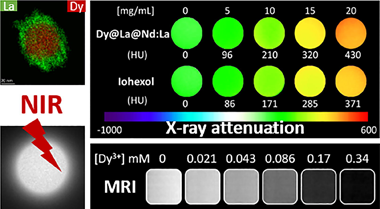
We have developed a trimodal bioimaging probe for near-infrared luminescent imaging, high-field magnetic resonance imaging, and X-ray computed tomography using Dy3+ as the paramagnetic component and Nd3+ as the luminescent cation, both of them incorporated in a vanadate matrix. Among different essayed architectures (single phase and core-shell nanoparticles) the one showing the best luminescent properties is that consisting of uniform DyVO4 nanoparticles coated with a first uniform layer of LaVO4 and a second layer…

Carboxylate functionalized NaDy(MoO4)(2) nanoparticles with tunable size and shape as high magnetic field MRI contrast agents

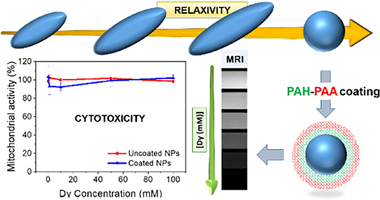
Uniform sodium-dysprosium double molybdate (NaDy(MoO4)(2)) nanoparticles having different morphologies (spheres and ellipsoids) and tunable size have been synthesized for the first time in literature. The procedure is based on a homogeneous precipitation process at moderated temperatures (<= 220 ?) from solutions containing appropriated precursors dissolved in ethylene glycol-water mixtures, in the absence (spheres) or the…

Holmium phosphate nanoparticles as negative contrast agents for high-field magnetic resonance imaging: Synthesis, magnetic relaxivity study and in vivo evaluation

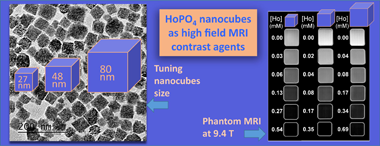
The increasing use of high magnetic fields in magnetic resonance imaging (MRI) scanners demands new contrast agents, since those used in low field instruments are not effective at high fields. In this paper, we report the synthesis of a negative MRI contrast agent consisting of HoPO4 nanoparticles (NPs). Three different sizes (27 nm, 48 nm and 80 nm) of…

Facile synthesis and characterization of a novel 1,2,4,5-benzene tetracarboxylic acid doped polyaniline@zinc phosphate nanocomposite for highly efficient removal of hazardous hexavalent chromium ions from water

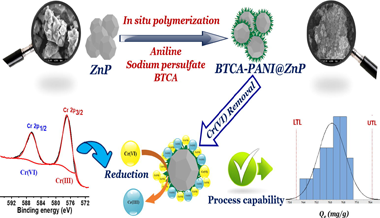
The present study describes the preparation of a novel 1,2,4,5-benzene tetracarboxylic acid doped polyaniline@zinc phosphate (BTCA-PANI@ZnP) nanocomposite via a facile two-step procedure. Thereafter, the as-prepared composite material adsorption characteristics for Cr(VI) ions removal were evaluated under batch adsorption. Kinetic approach studies for Cr(VI) removal, clearly demonstrated that the results of the adsorption process followed the…

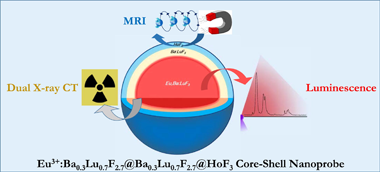
Design of a nanoprobe for high field magnetic resonance imaging, dual energy X-ray computed tomography and luminescent imaging

The combination of different bioimaging techniques, mainly in the field of oncology, allows circumventing the defects associated with the individual imaging modalities, thus providing a more reliable diagnosis. The development of multimodal endogenous probes that are simultaneously suitable for various imaging modalities, such as magnetic resonance imaging (MRI), X-ray computed tomography (CT) and luminescent imaging…

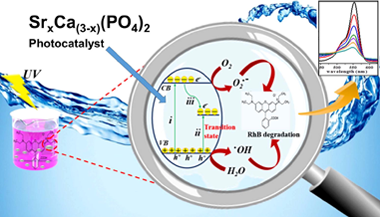
Influence of Sr-doping on structural, optical and photocatalytic properties of synthesized Ca3(PO4)2

Well-crystallized Ca3(PO4)2 doped and un-doped nano-particles with the maximum strontium content (40 wt% Sr) followed by calcination at 800 °C for 3 h were synthesized via facile co-precipitation method. DTA/TGA, X-ray diffraction (XRD), energy dispersive scanning electron microscopy (SEM/EDX), UV–vis diffuse reflectance spectrum (UV–vis DRS), Raman spectroscopy and photoluminescence (PL) techniques were used for material characterization. The (XRD)…

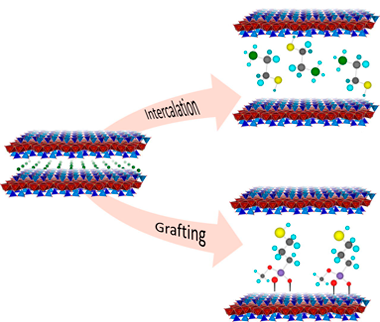
An insight on the design of mercapto functionalized swelling brittle micas

Surface modification of natural clay minerals with reagents containing metal chelating groups has great environmental value. The functionalization by adsorption or grafting guarantees a durable immobilization of the reactive organic groups, preventing their leaching when they are used in liquid media. The aim of this research was the designed mercapto functionalization of swelling brittle micas,…

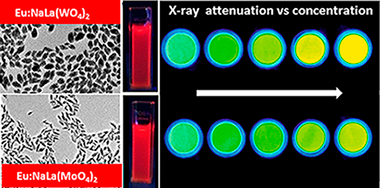
Synthesis, functionalization and properties of uniform europium-doped sodium lanthanum tungstate and molybdate (NaLa(XO4)(2), X = Mo,W) probes for luminescent and X-ray computed tomography bioimaging

A one-pot simple procedure for the synthesis of uniform, ellipsoidal Eu3+-doped sodium lanthanum tungstate and molybdate (NaLa(XO4)(2), X = W, Mo) nanophosphors, functionalized with carboxylate groups, is described. The method is based on a homogeneous precipitation process at 120 degrees C from appropriate Na+ Ln(3+) and tungstate or molybdate precursors dissolved in ethylene glycol/water mixtures…

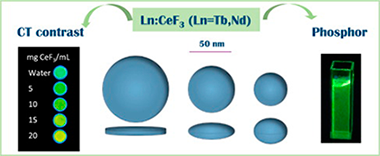
Room temperature synthesis of water-dispersible Ln(3+):CeF3 (Ln = Nd, Tb) nanoparticles with different morphology as bimodal probes for fluorescence and CT imaging

The singular properties of lanthanide-based inorganic nanoparticles (NPs) has raised the attention of the scientific community in biotechnological applications. In particular, those systems with two or more functionalities are especially interesting. In this work, an effective and commercially attractive procedure has been developed that renders uniform, water-dispersible Ln(3+):CeF3 (Ln = Tb, Nd) NPs with different…

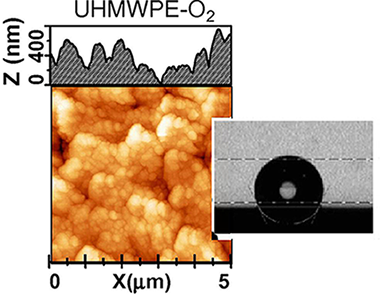
Roughness assessment and wetting behavior of fluorocarbon surfaces

The wetting behavior of fluorocarbon materials has been studied with the aim of assessing the influence of the surface chemical composition and surface roughness on the water advancing and receding contact angles. Diamond like carbon and two fluorocarbon materials with different fluorine content have been prepared by plasma enhanced chemical vapor deposition and characterized by…