Integration of calcium looping and calcium hydroxide thermochemical systems for energy storage and power production in concentrating solar power plants

Energy storage is a key factor in the development of renewables-based electrical power systems. In recent years, the thermochemical energy storage system based on calcium-looping has emerged as an alternative to molten salts for energy storage in high-temperature concentrated solar power plants. This technology still presents some challenges that could be solved by integrating the…

Large-scale oxygen-enriched air (OEA) production from polymeric membranes for partial oxycombustion processes

Partial oxycombustion using Oxygen-Enriched Air (OEA), produced by air-gas separation with polymeric membranes, combined synergistically with CO2 capture technologies, can reduce the overall energy cost of CO2 capture, and it is a potential alternative to conventional CO2 capture technologies. An exhaustive review of polymeric membranes for this application is presented. The best membranes showed permeability…

A national data-based energy modelling to identify optimal heat storage capacity to support heating electrification

Heating decarbonisation through electrification is a difficult challenge due to the considerable increase in peak power demand. This research proposes a novel modelling approach that utilises easily accessible national-level data to identify the required heat storage volume in buildings to decrease peak power demand and maximises carbon reductions associated with electrified heating technologies through smart demand-side response. The approach assesses the optimal shifting of heat pump operation to meet thermal heating demand according to different heat storage capacities in buildings, which are defined in relation to the time (in hours) in which…

Assessment of pilot-plant scale solar photocatalytic hydrogen generation with multiple approaches: Valorization, water decontamination and disinfection

The main goal of the present study was to explore pilot-scale combination of H-2 generation with simultaneous water disinfection or decontamination. Performance of a TiO2-CuO mixture for solar-to-hydrogen (STH) con-version was studied, focusing on treatment optimization (catalyst dose, proportion of semiconductors in the mixture and concentration of the sacrificial agent). Experiments were performed in a…

Assessment of pilot-plant scale solar photocatalytic hydrogen generation with multiple approaches: Valorization, water decontamination and disinfection

The main goal of the present study was to explore pilot-scale combination of H-2 generation with simultaneous water disinfection or decontamination. Performance of a TiO2-CuO mixture for solar-to-hydrogen (STH) con-version was studied, focusing on treatment optimization (catalyst dose, proportion of semiconductors in the mixture and concentration of the sacrificial agent). Experiments were performed in a…

Oxygen production routes assessment for oxy-fuel combustion

Oxyfuel combustion is a promising alternative to decarbonize the power sector. However, the main barrier to commercial deployment of the technology is the high energy consumption associated with oxygen production (-200-300 kWh per ton of O-2), which penalizes the thermal-to-electric efficiency of 8.5-12% compared to traditional air combustion plants. Typically, oxygen is obtained from a cryogenic air separation process. However, other technologies have been…

New biomorphic filters to face upcoming particulate emissions policies: A review of the FIL-BIO-DIESEL project

With a high number of diesel vehicles worldwide, particulate emission control is an urgent issue with a global impact, from the health of citizens to commercial future of this technology in some transport segments. Particulate filters are widely used in automotive engines to comply emissions regulations, but current technologies have room for improvement as they…

On the relevant role of solids residence time on their CO2 capture performance in the Calcium Looping technology

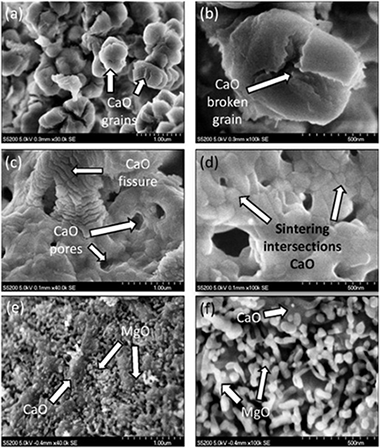
The multicycle CO2 capture performance of CaO derived from natural limestone and dolomite has been investigated by means of thermogravimetry under realistic Calcium-Looping conditions, which necessarily involve high CO2 concentration and high temperatures in the calcination stage and fast transitions between the carbonation and calcination stages. Natural dolomite allows reducing the calcination temperature as compared…