Multiple pollutants removal by functionalized heterostructures based on Na-2-Mica

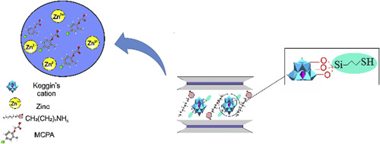
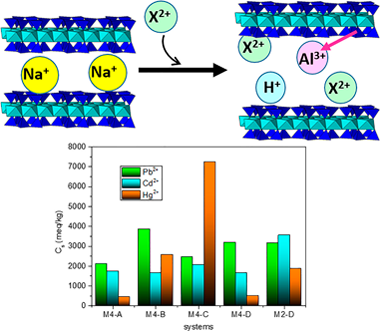
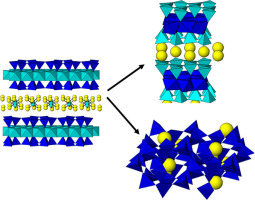
Organomica, C8-2-Mica, was obtained from a high charged synthetic mica, Na-2-Mica, by cation exchange reaction with octylammonium cations and these were used to host other bulky guest species such as polyhydroxy aluminium cations, Al(13)20. The hydrolization of 3-mercaptopropyltrimethoxysilane (MPTMS) allowed the covalent attachment with hydroxyl groups of the oligomeric cation, providing thiol groups that create…

Microbiological induced carbonate (CaCO3) precipitation using clay phyllites to replace chemical stabilizers (cement or lime)

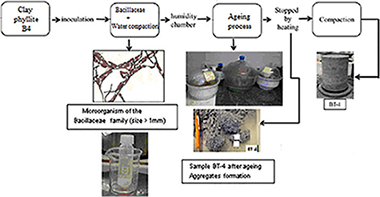
The objective of the present study is to develop a biotechnological tool for a new application of clay phyllites as stabilized materials in linear works replacing chemical stabilizer (e.g. cement or lime) by natural cement, formed by precipitated calcium carbonate generated by microorganisms of the Bacillaceae family (Bacilluspasteurii). Part of the development process conducting a chemical and mineralogical characterization and an examination of physical and hydromechanical properties. The…

Heteroatom framework distribution and layer charge of sodium Taeniolite

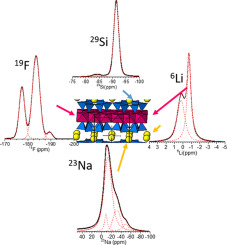
The most advanced applications of clays depend crucially on their hydration state and swelling is probably the most important feature of expandable 2:1 layered silicate. Sodium Taeniolite, Na-TAE, a swelling trioctahedral fluormica, has been synthesized and studied using thermogravimetric analysis, X-ray diffraction, scanning electron microscopy and infrared and solid state NMR spectroscopies. The results indicated the formation of a swelling…

Correlation between chemical and mineralogical characteristics and permeability of phyllite clays using multivariate statistical analysis

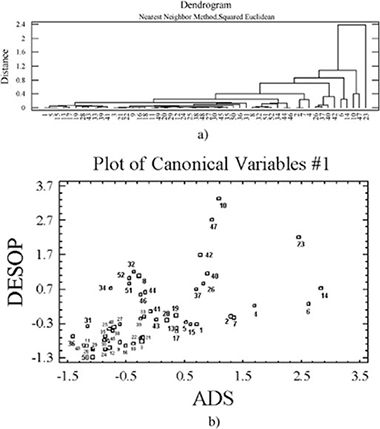
Phyllite clays are applied as a layer on a surface to be waterproofed and subsequently compacted. For this purpose, phyllite clays deposits can be grouped by their chemical and mineralogical characteristics, and these characteristics can be connected with their properties, mainly permeability, in order to select those deposits with the lowest permeability values. Several deposits…

Effect of lime on stabilization of phyllite clays

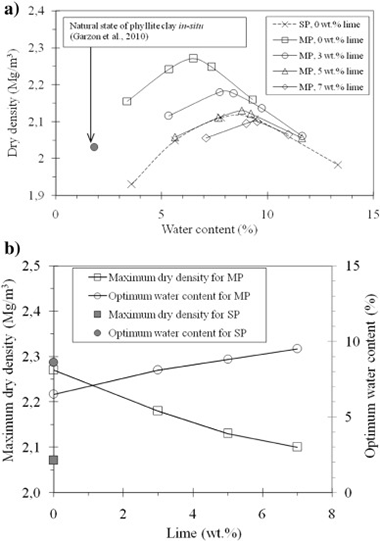
This paper represents a new advance in the study of engineering properties and material applications of phyllite clays. Considering their potential use as construction materials for structures subjected to low stress levels, this laboratory research investigated the stabilization and improvement in engineering properties of a Spanish phyllite clay achieved by the addition of 3, 5…

Ceramics from clays and by-product from biodiesel production: Processing, properties and microstructural characterization

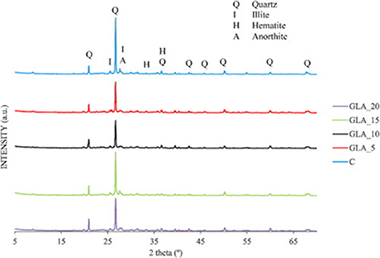
The production of biodiesel generates a by-product called glycerine which contains glycerol that cannot be reintegrated into the same manufacturing process. The ceramic bricks are an interesting option to set in their structure a wide range of by-products and residues materials and composites, sometimes serving only as a reservoir for the inert residue, and other,…

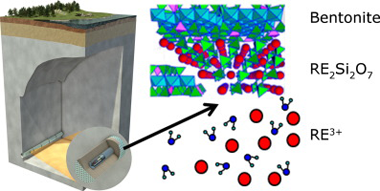
Impact of hydrothermal treatment of FEBEX and MX80 bentonites in water, HNO3 and Lu(NO3)(3) media: Implications for radioactive waste control

Engineered barriers of deep geological repositories (DGR) are commonly constructed with bentonite. FEBEX and MX80 bentonites have been selected by different countries as reference materials for the sealing of repositories; however, their chemical reactivity with high-level long-lived radioactive wastes (HLRW) under subcritical conditions had not been explored before. The hydrothermal stability in neutral and acid…

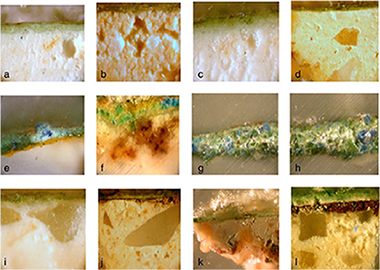
Green pigments of Roman mural paintings from Seville Alcazar

We report here a study of 30 fragments of green wall paintings from Roman times found in the Patio de Banderas excavation in Seville Alcazar. The sample characterisation was realised using optical microscopy, colourimetry, infrared and micro-Raman spectroscopy, X-ray diffraction, and scanning electron microscopy equipped with energy dispersive X-ray spectroscopy. The study of these pigments…