Microstructural and mechanical evaluation of porous biomorphic silicon carbide for high temperature filtering applications

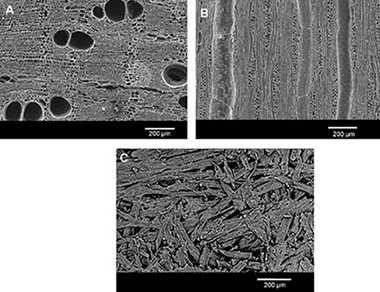
Biomorphic SiC (bioSiC) is a low cost SiC/Si composite obtained by melt infiltration of carbon preforms obtained from the pyrolysis of cellulose precursors. The porosity and pore size distribution of bioSiC can be tailored for specific applications by adequate selection of the wood precursor. Natural and artificial industrial woods were explored as possible bioSiC precursors.…

Comparative investigation of Al- and Cr-doped TiSiCN coatings

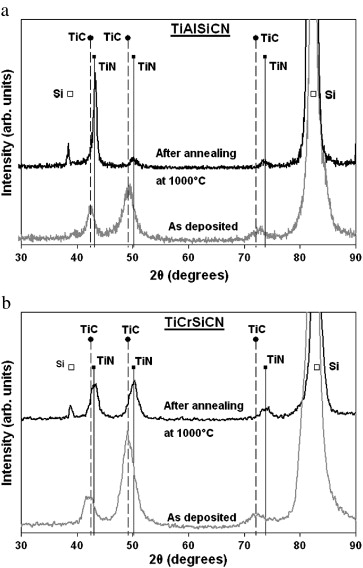
The aim of this work was a comparative investigation of the structure and properties of Al- and Cr-doped TiSiCN coatings deposited by magnetron sputtering of composite TiAlSiCN and TiCrSiCN targets produced by self-propagating high-temperature synthesis method. Based on X-ray diffraction, scanning and transmission electron microscopy, X-ray photoelectron spectroscopy, and Raman spectroscopy data, the Al- and…

Natural earth pigments from Roman and Arabic wall paintings revealed by spectroscopic techniques

Full identification of pigments used in wall paintings by Romans and Arabs that were recently discovered was achieved by the combined application of several spectroscopy methods. Identification of pigments was provided by the use of micro-Raman and FT-IR spectroscopy, while UV-Visible spectroscopy and chromatic studies permitted the authors to identify slight variations of hue attributed…

Compressive strength degradation in ZrB2-based ultra-high temperature ceramic composites

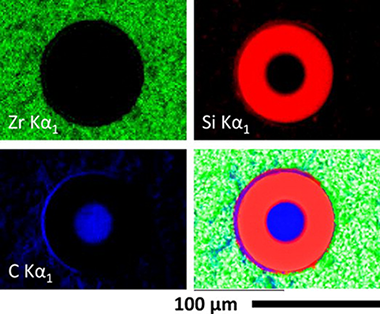
The high temperature compressive strength behavior of zirconium diboride (ZrB2)-silicon carbide (SiC) particulate composites containing either carbon powder or SCS-9a silicon carbide fibers was evaluated in air. Constant strain rate compression tests have been performed on these materials at room temperature, 1400, and 1550°C. The degradation of the mechanical properties as a result of atmospheric…

Interplay of Resonant Cavity Modes with Localized Surface Plasmons: Optical Absorption Properties of Bragg Stacks Integrating Gold Nanoparticles

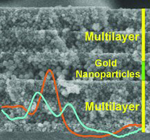
A procedure to prepare porous photonic crystal resonators containing gold nanoparticles is reported. The optical absorption of the ensemble, resulting from the excitation of the localized surface plasmon of the metallic beads, is finely tuned by a gradual shift of the cavity mode. This is achieved by infiltration of the void network with different guest…

Structure and support induced structure disruption of soft nanoparticles obtained from hydroxylated fatty acids

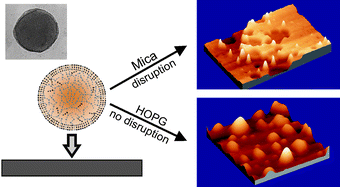
Soft and spherical nanoparticles, named as cutinsomes, have been prepared from concentrated 9(10),16-dihydroxypalmitic acid (diHPA) in aqueous solution. After isolation, cutinsomes have been chemically and structurally characterized by ATR-FTIR, TEM and dynamic atomic force microscopy (dynamic AFM). The nanoparticle can be described as a lipidic, liquid-like and mostly esterified core surrounded by a polar shell…