Microstructural characterization and thermal stability of He charged amorphous silicon films prepared by magnetron sputtering in helium

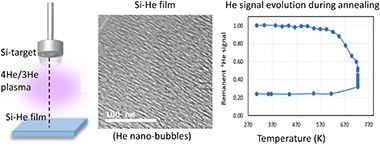
Sputtering of silicon in a Helium magnetron discharge has been reported as a bottom-up procedure to obtain amorphous Si films containing high amounts of gas-filled nanopores. Here we compare the microstructure and composition of Si-He nanocomposite films deposited by magnetron sputtering (MS) with 4He in DC or RF and 3He in RF operation modes. Electron…

Bio-based composite fibers from pine essential oil and PLA/PBAT polymer blend. Morphological, physicochemical, thermal and mechanical characterization

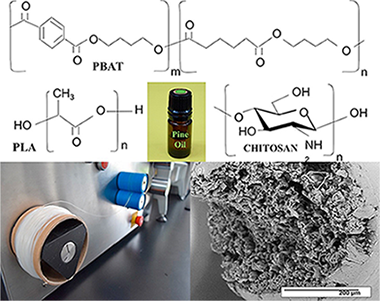
Biodegradable aliphatic polyesters are an alternative to reduce the use of synthetic plastic materials that cause severe damage to the environment. Formulations based on poly (lactic acid) (PLA) and poly (butylene adipate-co-terephthalate) (PBAT), were mixed in a 60:40 ratio, adding different concentrations of pine essential oil through the use of extrusion technology to obtain biodegradable…

Structural and chemical reactivity modifications of a cobalt perovskite induced by Sr-substitution. An in situ XAS study

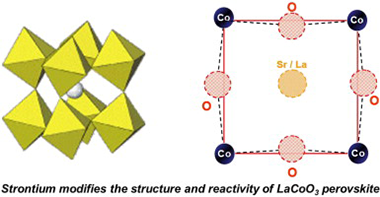
LaCoO3 and La0.5Sr0.5O3O3-delta perovskites have been studied by in situ Co K-edge XAS. Although the partial substitution of La(III) by Sr(II) species induces an important increase in the catalytic oxidation activity and modifies the electronic state of the perovskite, no changes could be detected in the oxidation state of cobalt atoms. So, maintaining the electroneutrality…

Chromium removal on chitosan-based sorbents – An EXAFS/XANES investigation of mechanism

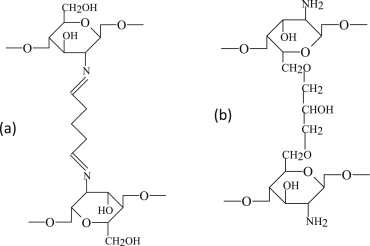
Chitosan is known to be a good sorbent for metal-containing ions as the presence of amino groups and hydroxyl functions act as effective binding sites. Its crosslinking, employing glutaraldehyde or epichlorohydrin, may change the sorption properties (sorption capacity or diffusion properties) of this biopolymer, since the available functional groups are different in each case. X-ray…

Synthesis and tribological properties of WSex films prepared by magnetron sputtering

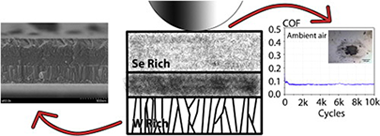
WSex films with variable Se/W ratio were deposited by non-reactive r.f. magnetron sputtering from WSe2 target changing the applied d.c. pulsed bias conditions and substrate temperature. The structural and chemical properties were measured by cross-sectional scanning electron microscopy (X-SEM), energy dispersive analysis (EDX), X-ray diffraction (XRD), Raman and X-ray photoelectron spectroscopy (XPS). The tribological properties…

LaPO4:Er microspheres with high NIR luminescent quantum yield

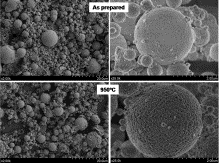
Er-doped LaPO4 microspheres have been synthesized by spray pyrolysis and the near infrared (NIR) properties have been characterized. It has been found that, following an adequate post-annealing treatment, the emission properties are remarkably improved. The NIR luminescence intensity is highly enhanced and its decay time increases to a value almost coincident with the reported radiative…

Structural, chemical surface and transport modifications of regenerated cellulose dense membranes due to low-dose γ-radiation

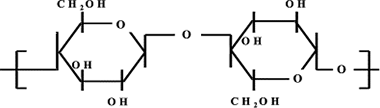
Modifications caused in commercial dense regenerated cellulose (RC) flat membranes by low-dose γ-irradiation (average photons energy of 1.23 MeV) are studied. Slight structural, chemical and morphological surface changes due to irradiation in three films with different RC content were determined by ATR-FTIR, XRD, XPS and AFM. Also, the alteration of their mechanical elasticity has been…

A facile single-step procedure for the synthesis of luminescent Ln 3+:YVO4 (Ln = Eu or Er + Yb)-silica nanocomposites

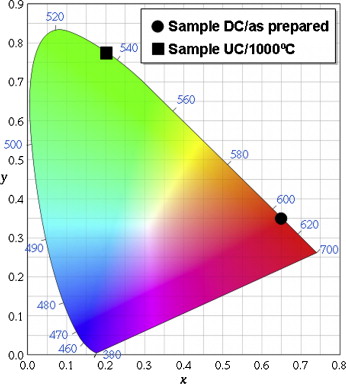
A simple and single-step method for the production of Ln-doped YVO 4 nanocrystals and their simultaneous encapsulation in a silica network based on the pyrolysis of liquid aerosols at 800 °C is reported. The procedure is illustrated for Yb,Er:YVO4-silica nanocomposites consisting of spherical particles, which present up-converted green luminescence after IR excitation whose efficiency increased…

Catalytic nanomedicine: Functionalisation of nanostructured cryptomelane

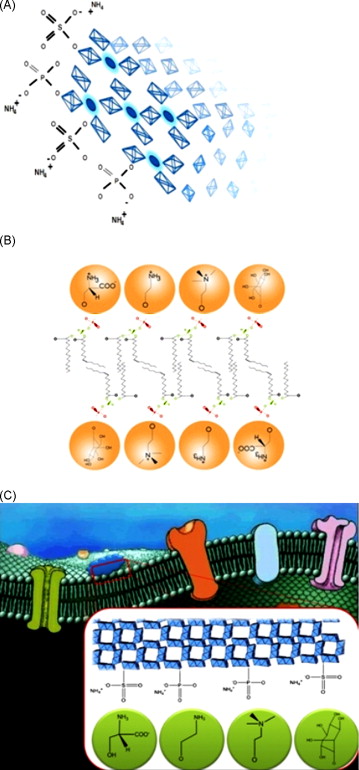
Nanostructured cryptomelanes (KMn8O16) were synthesized from manganese sulphate and manganese acetate precursors by the reflux method. The respectively obtained samples, CRYSO4 and CRYAc, were functionalised with hydroxyl, ammonium, sulphate and phosphate groups in order to modify the biocompatibility and surface properties of cryptomelane. Characterization by FTIR and XRD confirmed bond formation of CRY-NH, CRY=S=O, CRY-NH,…