




Sustainable Integration of Zinc Oxide Nanoparticles: Enhancing Properties of Poly(ε-Caprolactone) Electrospun Nanofibers and Cast Films

This study investigated the impact of adding zinc oxide nanoparticles (ZnO-NPs) to electrospun membranes and cast films made of poly(epsilon-caprolactone) (PCL). The physicochemical, mechanical, and morphological properties of the samples were analyzed. Physicochemical parameters included water contact angle (WCA), water vapor transmission rate (WVTR), permeance, water vapor permeability (WVP), light transmission (T-600), and transparency (T). Mechanical properties, such as maximum stress (6(max)), elongation (epsilon(max)), and Young’s modulus (MPa), were also evaluated. Morphological properties were…
Structure and Void Connectivity in Nanocolumnar Thin Films Grown by Magnetron Sputtering at Oblique Angles

The morphology and void connectivity of thin films grown by a magnetron sputtering deposition technique at oblique geometries were studied in this paper. A well-tested thin film growth model was employed to assess the features of these layers along with experimental data taken from the literature. A strong variation in the film morphology and pore topology was found as a function of the growth conditions, which have been linked to the different collisional transport of…

Advanced Strategies in Thin Films Engineering by Magnetron Sputtering

This Special Issue contains a series of reviews and papers representing some recent results and some exciting perspectives focused on advanced strategies in thin films growth, thin films engineering by magnetron sputtering and related techniques. Innovative fundamental and applied research studies are then reported, emphasizing correlations between structuration process parameters, new ideas and approaches for…

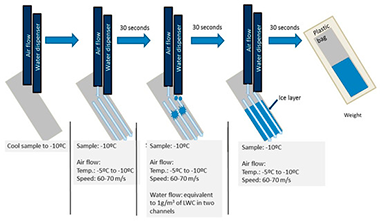
Hydrophobic and Icephobic Behaviour of Polyurethane-Based Nanocomposite Coatings

In this paper, hydrophobic nanocomposite coatings based on polyurethane (PUR) modified by nano-silica and silane-based compounds were manufactured by spraying. The main challenge was to assess and improve the hydrophobic as well as anti-icing properties of initially hydrophilic polymer coatings. The prepared nanocomposite coatings were characterized by means of scanning electron microscopy (SEM), optical profilometry…