Ultrapure Green High Photoluminescence Quantum Yield from FAPbBr3 Nanocrystals Embedded in Transparent Porous Films

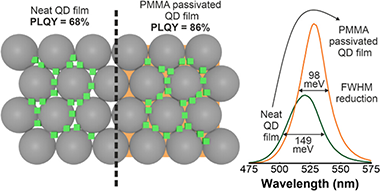
Achieving highly transparent and emissive films based on perovskite quantum dots (PQDs) is a challenging task since their photoluminescence quantum yield (PLQY) typically drops abruptly when they are used as building blocks to make a solid. In this work, we obtain highly transparent films containing FAPbBr(3) quantum dots that display a narrow green emission (lambda…

Correlation of Structure and Performance of Hard Carbons as Anodes for Sodium Ion Batteries

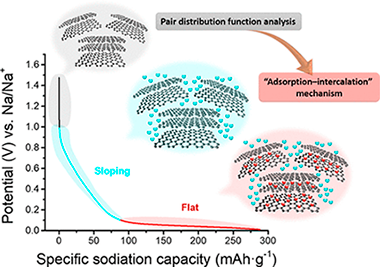
Hard carbons are the material of choice as negative electrode in sodium ion batteries. Despite being extensively studied, there is still debate regarding the mechanisms responsible for storage in low- and high-potential regions. This work presents a comprehensive approach to elucidate the involved storage mechanisms when Na ions insert into such disordered structures. Synchrotron X-ray…

Self-Assembly of the Nonplanar Fe(III) Phthalocyanine Small-Molecule: Unraveling the Impact on the Magnetic Properties of Organic Nanowires

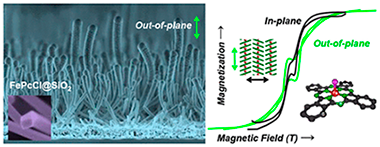
In this article we show for the first time the formation of magnetic supported organic nanowires (ONWs) driven by self-assembly of a nonplanar Fe(III) phthalocyanine chloride (FePcCl) molecule. The ONWs grow by a crystallization mechanism on roughness-tailored substrates. The growth methodology consists of a vapor deposition under low vacuum and mild temperature conditions. The structure,…

Perfectly Transparent Sr3Al2O6 Polycrystalline Ceramic Elaborated from Glass Crystallization

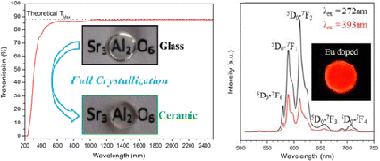
The highly visible and infrared (up to 6 mu m) transparent Sr3Al2O6 polycrystalline ceramic was obtained by full crystallization of the corresponding glass composition. The glass synthesis and the direct congruent crystallization processes are described, and the material transparency is discussed in light of its microstructure. This new transparent ceramic exhibits a high density (i.e.,…

Flexible, Adhesive, and Biocompatible Bragg Mirrors Based on Polydimethylsiloxane Infiltrated Nanoparticle Multilayers

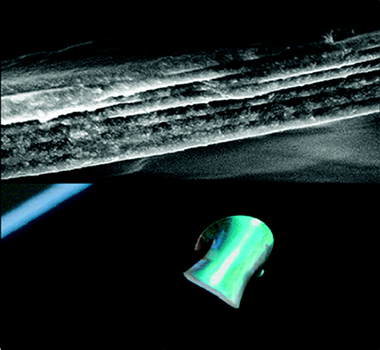
Herein we present a series of self-standing, flexible, and biocompatible optical interference filters obtained through infiltration and polymerization of an elastomer (polydimethylsiloxane) in a porous Bragg mirror prepared by alternating deposition of layers of TiO2 and SiO2 nanoparticles. The method proposed yields the uniform filling of the nanopores of the multilayer by the polymer, which…

Conformal Growth of Organic Luminescent Planar Defects within Artificial Opals

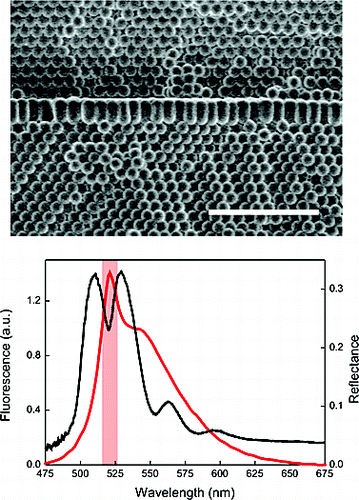
Herein, we present the result of combining, for the first time, the techniques of colloidal self-assembly and plasma-enhanced chemical vapor deposition to create a novel, high-quality, purely Organic active photonic crystal structure of controlled optical properties. We show a fast. reliable, and accurate procedure to introduce two-dimensional luminescent organic defect layers within artificial polystyrene opals…