Carbonylation Reactions Using Single-Atom Catalysts

The development of highly efficient and selective catalysts for carbonylation reactions represents a significant challenge in catalysis. Single-atom catalysts (SACs) have postulated as promising candidates able to combine the strengths of both homogeneous and heterogeneous catalysts. In this paper, we review recent advances in tailoring solid supports for SACs to enhance their catalytic performance in…

Mechanistic Considerations on the H-2 Production by Methanol Thermal-assisted Photocatalytic Reforming over Cu/TiO2 Catalyst

We have studied the gas phase H-2 production by methanol thermo-photoreforming using Cu-modified TiO2. Metal co-catalyst has been deposited by means of photodeposition method. The concentration of methanol in the steam was also considered. It appears that H-2 production is notably higher as temperature increases. Moreover, the optimum H-2 yield is achieved using methanol concentration…

Effect of Gold Particles Size over Au/C Catalyst Selectivity in HMF Oxidation Reaction

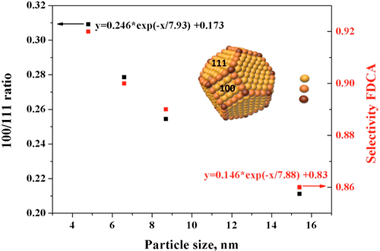
A series of gold nanoparticles in the 4-40 nm range were prepared, immobilized on activated carbon and further tested, at low base concentration, in the catalytic oxidation of 5-hydroxymethyl furfural (HMF) to 2,5-furandicarboxylic acid (FDCA). Gold particles size variation has no influence on HMF conversion but significantly affects product selectivity and carbon balance. This behavior…

Ultrastable CoxSiyOz Nanowires by Glancing Angle Deposition with Magnetron Sputtering as Novel Electrocatalyst for Water Oxidation

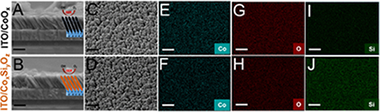
Cobalt is one of the most promising non-noble metal as electrocatalyst for water oxidation. Herein, a highly stable silicon-cobalt mixed oxide thin film with a porous columnar nanostructure is proposed as electrocatalyst for oxygen evolution reaction (OER). CoOx and CoxSiyOz layers with similar thickness were fabricated at room temperature by magnetron sputtering in a glancing…

Operando Spectroscopic Evidence of the Induced Effect of Residual Species in the Reaction Intermediates during CO2 Hydrogenation over Ruthenium Nanoparticles

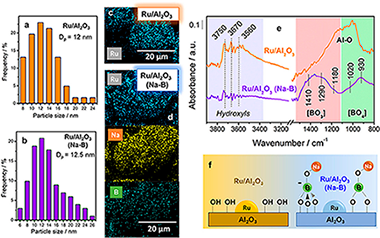
In this work, we present a highly active catalyst based on Ru nanoparticles dispersed on alumina, which showed an unexpected activity for CO2 methanation. This exceptional catalytic behavior was attributed to the presence of residual species that remained on the surface after synthesis. Furthermore, through Operando DRIFTS (diffuse reflectance infrared Fourier transform spectroscopy) measurements it…

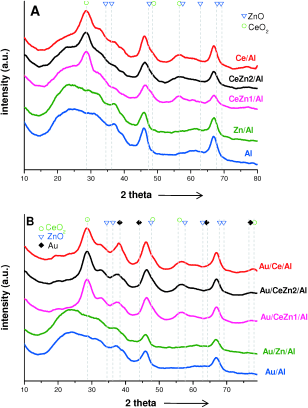
Viability of Au/CeO2-ZnO/Al2O3 Catalysts for Pure Hydrogen Production by the Water-Gas Shift Reaction

The production of H2 pure enough for use in fuel cells requires the development of very efficient catalysts for the water–gas shift reaction. Herein, a series of gold catalysts supported on ZnO-promoted CeO2–Al2O3 are presented as interesting systems for the purification of H2 streams through the water–gas shift reaction. The addition of ZnO remarkably promotes…

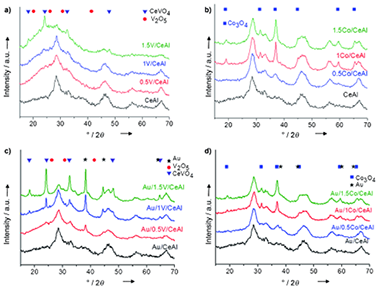
Influence of Vanadium or Cobalt Oxides on the CO Oxidation Behavior of Au/MOx/CeO2-Al2O3 Systems

A series of V2O5– and Co3O4-modified ceria/alumina supports and their corresponding gold catalysts were synthesized and their catalytic activities evaluated in the CO oxidation reaction. V2O5-doped solids demonstrated a poor capacity to abate CO, even lower than that of the original ceria/alumina support, owing to the formation of CeVO4. XRD, Raman spectroscopy, and H2-temperature programmed…

Boron Compounds as Stabilizers of a Complex Microstructure in a Co-B-based Catalyst for NaBH4 Hydrolysis

Co-B-based materials are widely used as catalysts for hydrogen generation through sodium borohydride self-decomposition. In the mid 1990s, the aqueous and organic chemistry involved in Co-B synthesis and handling was studied. Nevertheless, the exact microstructure of these catalysts has remained unsolved. Herein we present an exhaustive study which shows a new and complete microstructural view…