


Multifold Enhanced Photon Upconversion in a Composite Annihilator System Sensitized by Perovskite Nanocrystals

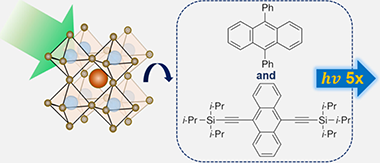
Photon upconversion via triplet-triplet annihilation (TTA-UC) provides a pathway to overcoming the thermodynamic efficiency limits in single-junction solar cells by allowing the harvesting of sub-bandgap photons. Here, we use mixed halide perovskite nanocrystals (CsPbX3, X = Br/I) as triplet sensitizers, with excitation transfer to 9,10-diphenylanthracene (DPA) and/or 9,10-bis[(triisopropylsilyl)ethynyl]anthracene (TIPS-An) which act as the triplet annihilators.…
Strong Light-Matter Coupling in Lead Halide Perovskite Quantum Dot Solids

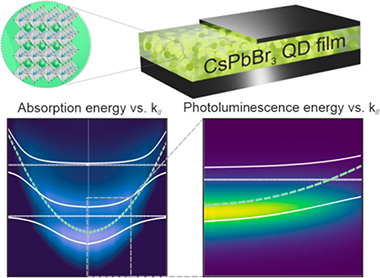
Strong coupling between lead halide perovskite materials and optical resonators enables both polaritonic control of the photophysical properties of these emerging semiconductors and the observation of fundamental physical phenomena. However, the difficulty in achieving optical-quality perovskite quantum dot (PQD) films showing well-defined excitonic transitions has prevented the study of strong light-matter coupling in these materials,…

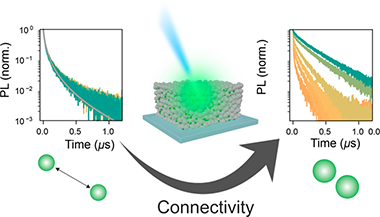
Effect of Connectivity on the Carrier Transport and Recombination Dynamics of Perovskite Quantum-Dot Networks

Quantum-dot (QD) solids are being widely exploited as a solution-processable technology to develop photovoltaic, light-emission, and photodetection devices. Charge transport in these materials is the result of a compromise between confinement at the individual QD level and electronic coupling among the different nanocrystals in the ensemble. While this is commonly achieved by ligand engineering in…

Diverse Applications of Nanomedicine

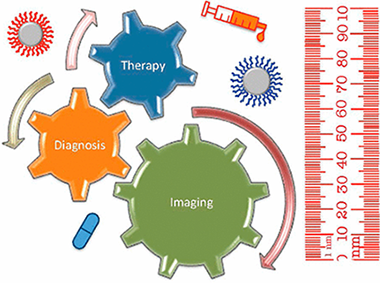
The design and use of materials in the nanoscale size range for addressing medical and health-related issues continues to receive increasing interest. Research in nanomedicine spans a multitude of areas, including drug delivery, vaccine development, antibacterial, diagnosis and imaging tools, wearable devices, implants, high-throughput screening platforms, etc. using biological, nonbiological, biomimetic, or hybrid materials. Many of these…

Optofluidic Modulation of Self-Associated Nanostructural Units Forming Planar Bragg Microcavities

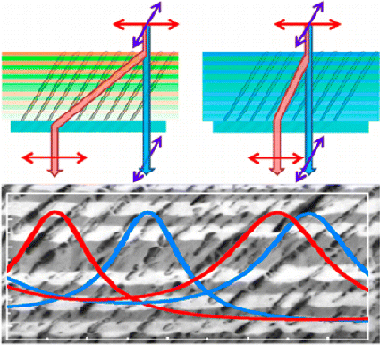
Bragg microcavities (BMs) formed by the successive stacking of nanocolumnar porous SiO2 and TiO2 layers with slanted, zigzag, chiral, and vertical configurations are prepared by physical vapor deposition at oblique angles while azimuthally varying the substrate orientation during the multilayer growth. The slanted and zigzag BMs act as wavelength-selective optical retarders when they are illuminated…