


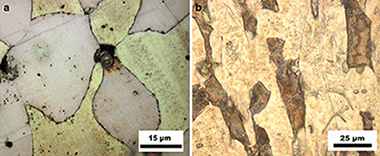
A comparative study of the composition and microstructure of two different brass alloys from reed pipes, one from a Spanish baroque organ and the other from a modern one, was carried out. This study allowed us to determine the procedure followed to produce the brass used to make ancient reed pipes. Moreover the distribution and correlation of lead and other trace elements present into the main component of the brass, the copper and zinc phases, of the historical tongues and shallots were established. This chemical composition was compared with that of a tongue from a twentieth-century organ. The whole study was accomplished using a combination of laboratory and synchrotron radiation techniques. X-ray fluorescence was the technique used to obtain elemental and chemical imaging of the main phases and the trace elements at a sub-micrometer scale.