


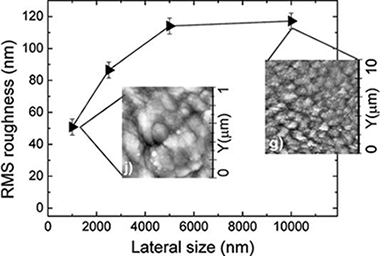
This commentary addresses the problem of determining surface roughness values and their use to assess the wetting behavior of surfaces. For very rough surfaces it is shown that depending on the observation scale by atomic force microscopy (AFM) quite different RMS roughness values can be obtained and that only the values taken at saturation can be used for properly describing the roughness of the examined materials. This effect has clear consequences when trying to apply wetting models to account for the influence of roughness on contact angles. These ideas are discussed with examples taken from rough polymer surfaces subjected to plasma etching. Debate – Discussion: To account for the wetting behavior of real surfaces within the Wenzel and similar models only surface roughness values determined at saturation can be used. This implies to check different observation areas by AFM and to choose the RMS roughness values once a maximum value of this parameter has been reached.