


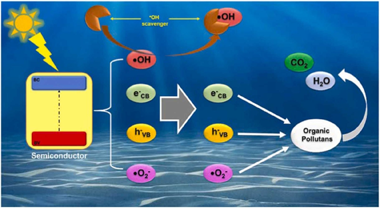
In heterogeneous photocatalysis, different reactive species generated from the excitation of the semiconductor are responsible for the degradation of different contaminants in aqueous solution. In order to evaluate the influence of each of these reactive species on the photocatalysis process, it is common to perform an analysis using different chemical compounds, which (in theory) react selectively with only one reactive species, preventing this species from participating in the process. Questioning this analysis is the aim of this work and the reasons that lead us to this will be described and discussed. For this, different investigations were selected where this analysis was carried out on two model substrates, Rhodamine B and Phenol. With this, it was possible to determine which compounds are most used as scavengers for the different reactive species, and how these compounds influence the photodegradation process. It was possible to shown that none of the commonly used scavengers react selectively with only one reactive species, since it can also influence other reactions, either by reacting with other reactive species, with the surface of the catalyst, or with the substrate under study, among others. In our opinion, the conclusions obtained by using scavenger analysis should be carefully considered, and the compounds used should be renamed as interfering species of the photocatalytic process.